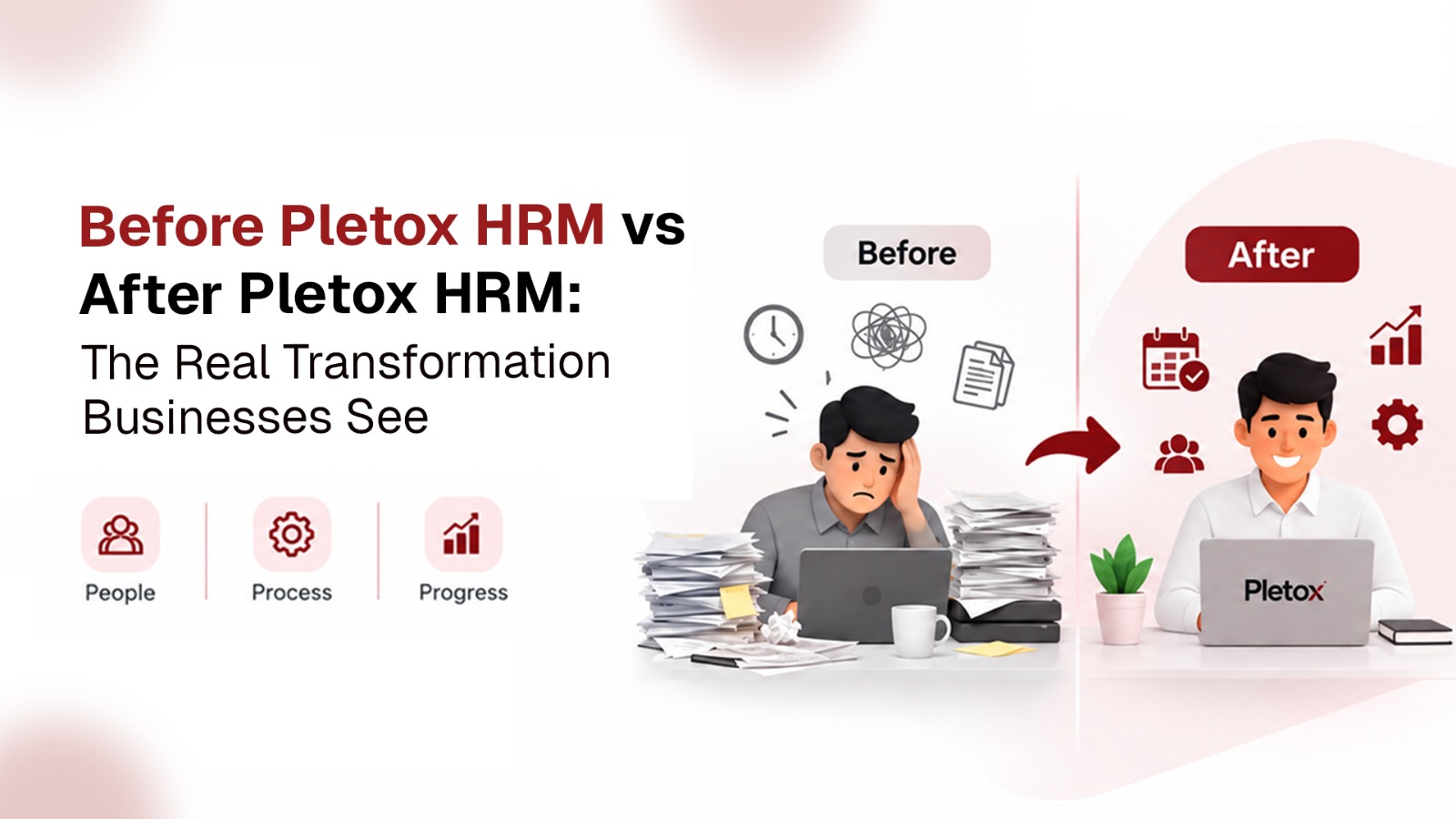
Before Pletox HRM vs After Pletox HRM : The Real Transformation Businesses See
If you've ever run HR operations using a mix of Excel sheets, WhatsApp leave requests, and a payroll register that somehow never tallies at month-end, you already know the real cost of manual HR management. It's not just the wasted hours — it's the errors, the missed compliance deadlines, and the constant firefighting that keeps HR teams from doing anything strategic.
That's exactly the gap Pletox HRM was built to close. In this blog, we're breaking down what HR operations actually look like before Pletox and after Pletox, module by module, so you can see the real transformation rather than just marketing claims.
Before: Scattered Employee Records → After: One Centralized HR System
Before Pletox HRM, most growing businesses manage employee data across a dozen different places — a folder of offer letters, an Excel sheet for personal details, WhatsApp for document collection, and someone's personal drive for policy files. Finding one employee's complete record often means digging through three different systems.
After Pletox HRM, everything lives in one place. Org structure, reporting hierarchy, employee documents, and core HR workflows are centralized through Pletox's HR & Employee Management module, giving HR teams a single, reliable source of truth instead of scattered files.
Before: Manual Attendance Registers → After: Smart, Real-Time Attendance Tracking
Before Pletox HRM, attendance is usually tracked through a physical register, a basic biometric machine with no integration, or worse — an honor system. Calculating late marks, weekly offs, and overtime by hand at month-end is slow and painfully error-prone.
After Pletox HRMS, attendance becomes fully automated and accurate. With Pletox's Time & Attendance module, teams can capture punches through biometric devices, selfie + location, or kiosk mode — all feeding directly into a live, seamless attendance dashboard that HR and supervisors can trust.
Before: Manual Payroll Calculations → After: Fast, Accurate Payroll Processing
Before Pletox HRMS, payroll day is stressful. Someone is manually pulling attendance data, recalculating overtime, cross-checking deductions, and hoping nothing gets missed — because one payroll error means an unhappy employee and a compliance headache.
After Pletox HRMS, payroll becomes fast, reliable, and largely automated. Pletox's Payroll & Expenses module connects directly with attendance data, so salary structures, tax calculations, bonuses, advances, and reimbursements are processed accurately — with payslips generated in minutes, not days.
Before: Ad-Hoc Hiring → After: Structured Recruitment & Onboarding
Before Pletox HRMS, hiring usually means resumes buried in an inbox, interview feedback shared over calls, and a new employee's first week spent chasing paperwork instead of getting productive.
After Pletox HRMS, hiring becomes a structured, efficient workflow. Pletox's Recruitment & Onboarding module manages applicant tracking, interview scheduling, offer letters, and onboarding checklists — helping new hires get up to speed faster and with a far more professional first impression.
Before: Guesswork Performance Reviews → After: Data-Backed Performance Management
Before Pletox HRM, performance reviews often happen once a year, based on vague memory rather than real data, with no consistent goal-tracking in between.
After Pletox HRM, performance management becomes continuous and measurable. With Pletox's Performance Management module, teams can track goals, run structured feedback cycles, and use real performance insights — not guesswork — to guide growth conversations.
Before: Disconnected Task Tracking → After: Aligned Projects & Work Visibility
Before Pletox HRM, project updates live across email threads, personal notebooks, and the occasional status meeting — making it hard to know what's actually getting done.
After Pletox HRM, work becomes visible and aligned. Pletox's Projects & Tasks module lets teams plan work, assign tasks, track milestones, and stay aligned without constant follow-up calls.
Before: No Visibility on Field Teams → After: Real-Time Worklogs & Visit Tracking
Before Pletox HRM, businesses with field staff — sales reps, technicians, supervisors — often have zero real-time visibility into where their team is or what they're doing during the day.
After Pletox HRM, field operations become transparent and trackable. Pletox's Worklogs & Field Activity module captures visits, check-ins, and daily activity updates, giving managers a clear, real-time view of ground operations.
The Bigger Picture: From Chaotic to Connected
The common thread across every "before" scenario is the same — scattered systems, manual effort, and constant risk of error. The common thread across every "after" scenario is also the same — a connected, reliable, and scalable platform where HR, attendance, payroll, hiring, performance, and daily work all speak to each other.
This is the real Pletox HRMS effect: not just digitizing HR, but building a smart, future-ready operational backbone that grows with your business.
If your team is still living in the "before" column, it might be time to see what "after" actually feels like. Book a free demo and see how Pletox can transform your HR operations — module by module.