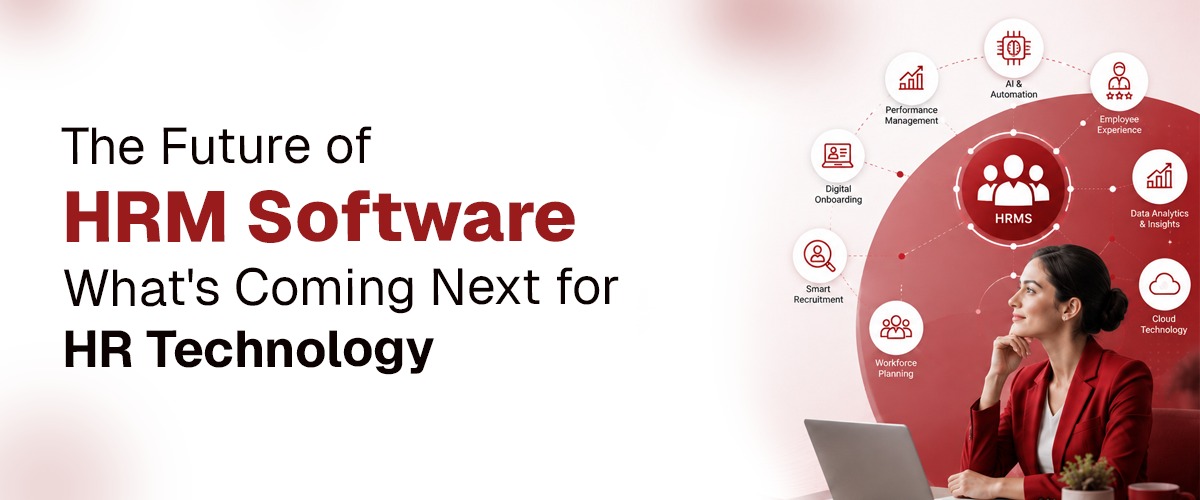
The Future of HRM Software: What's Coming Next for HR Technology
HR software has quietly moved from "nice to have" to the operating system of the modern workplace. A decade ago, most HR teams were still running attendance on spreadsheets and payroll on standalone tools that didn't talk to each other. Today, the conversation has shifted entirely — it's no longer about digitising HR, it's about building one connected system that runs people operations, work management, and business data together.
So where is HRM software actually headed next? And what should growing businesses look for as they choose (or upgrade) their HR technology stack? This guide breaks down the real trends shaping HR tech in 2026 and beyond, with practical examples of what they look like in day-to-day operations — and where a modern platform like Pletox HRMS fits into that future.
Why the Future of HRM Software Matters Right Now
HR technology is no longer confined to the back office. It's a board-level conversation because the pressures on HR teams have compounded: rising attrition costs, a widening skills gap, hybrid and frontline workforces that need different tools, and a growing web of compliance requirements across regions. Businesses that are still stitching together five disconnected tools for attendance, payroll, hiring, and task tracking are the ones falling behind.
The direction of travel is clear: HR leaders are moving toward unified, AI-assisted, real-time systems rather than siloed point solutions. Let's look at the specific trends driving that shift.
1. Agentic AI Is Replacing Simple Automation
For years, "AI in HR" mostly meant chatbots answering FAQs or resume keyword-matching. That's changing fast. Industry research shows AI in HR is shifting from generative to agentic systems, with autonomous workflows now beginning to handle multi-step processes like onboarding and benefits queries end-to-end. In practice, that means an AI agent doesn't just answer "how many leave days do I have left" — it can process the leave request, check policy rules, notify the manager, and update the roster automatically.
Real-world example: Instead of an HR executive manually cross-checking attendance, approving leave, and updating payroll inputs across three separate tools, an agentic HR system does the checking and routing itself — flagging only the exceptions that need a human decision. This is the direction platforms like Pletox's attendance management software and payroll software are built toward: fewer manual touchpoints, more automated accuracy.
2. Skills-Based Hiring Is Overtaking Degree-Based Recruiting
One of the clearest structural shifts in HR technology is the move away from rigid job titles and degree requirements. Analysts note that organizations are increasingly using AI-driven workforce analytics to map what employees can actually do, rather than relying on what a resume says, with skills-based hiring and internal talent marketplaces becoming the default recruiting strategy in many organizations.
This matters because replacing a skilled employee is expensive — turnover costs can run as high as twice a departing employee's annual salary once recruitment, training, and ramp-up time are factored in. HRM software that connects recruitment and onboarding directly with performance management gives HR teams the visibility to promote and redeploy talent internally, instead of defaulting to external hiring every time a gap opens up.
3. Continuous Performance Management Replaces the Annual Review
The once-a-year performance review is on its way out. HR technology trend reports for 2026 point to performance management becoming a real-time, continuous, and integrated process, with annual reviews falling out of favor as organizations shift to ongoing feedback cycles.
Real-world example: A sales team using continuous check-ins can catch a slipping quota in week three of the quarter — not in the annual review six months later, when the damage is already done. Systems that combine goal tracking and performance insights with everyday task data give managers a live picture instead of a retrospective one.
4. Frontline and Field Workers Are Finally Getting Dedicated Tools
A huge share of the global workforce — field technicians, sales reps, delivery staff, site engineers — has historically been underserved by HR software built for desk-based employees. That's changing: reaching deskless and frontline workers is now described as a board-level conversation for HR technology buyers, and continuous listening tools are replacing static annual engagement surveys with real-time signals on retention risk.
This is exactly where field-first features matter — GPS-based visit tracking, selfie-and-location attendance, and mobile-first worklogs. Pletox's worklogs and field activity tracking and real-time location tracking tools were built for this reality: teams that aren't sitting at a desk still need accurate, real-time visibility.
5. Compliance and AI Governance Become Non-Negotiable
As AI takes on more HR decision-making, regulation is catching up. In the EU, AI governance for people-affecting tools is now described as a 2026 deliverable rather than a future consideration. Even outside the EU, compliance automation — tax rules, statutory deductions, labor law changes — is becoming a baseline requirement rather than a competitive advantage, especially for companies operating across multiple states or countries.
For HR software, this means payroll and attendance modules can't just be fast — they need to be built with compliance logic baked in. That's the philosophy behind Pletox's payroll and expense management module, which is designed to keep tax calculations, reimbursements, and statutory processing accurate as regulations shift.
6. One Connected Platform Instead of Ten Disconnected Tools
Perhaps the biggest overall shift in HR technology isn't a single feature — it's consolidation. Businesses are tired of paying for, learning, and maintaining separate tools for attendance, payroll, recruitment, CRM, project tracking, and billing. The future of HRM software is a single connected system where employee data, work data, and business data live together instead of being re-entered five times across five apps.
This is the core idea behind Pletox: a platform that brings HR and employee management, attendance, payroll, projects and tasks, assets and inventory, and even CRM and sales and quotations and billing into one system — so a growing business isn't stitching together a dozen subscriptions just to run its people and operations.
What This Means for Growing Businesses Choosing HR Software
If you're evaluating HR technology in 2026, the trends above translate into a practical checklist:
- Does it automate, not just digitize? Look for workflows that reduce manual approvals, not just move paper processes onto a screen.
- Does it support field and frontline teams, not just desk-based employees?
- Can it grow from HR into full operations — projects, CRM, billing — without needing five extra tools?
- Is compliance built in, or is it something you have to manage manually every time a rule changes?
- Does it give you real-time data, so decisions aren't made on month-old reports?
Platforms like Pletox HRMS are built around this exact checklist — combining core HR, attendance, payroll, performance, recruitment, and work management into one connected system, with mobile apps available on iOS and Android for teams that work outside a desk.
Frequently Asked Questions
1. What is the future of HRM software?
The future of HRM software is moving toward AI-assisted, connected platforms that handle HR, attendance, payroll, performance, and work management in one place — replacing disconnected point tools with real-time, automated systems.
2. Is AI going to replace HR teams?
No. AI in HR is increasingly agentic, meaning it automates repetitive, multi-step processes like onboarding or leave approvals, but decisions involving judgment, culture, and people management still need human HR professionals. AI is a support layer, not a replacement.
3. What should a modern HRMS include in 2026?
At minimum, a modern HRMS should cover employee records and org structure, flexible attendance tracking, automated payroll, performance management, recruitment and onboarding, and reporting — ideally on one platform rather than several disconnected tools. Pletox HRMS covers all of these through its HR and employee management, attendance, and payroll modules.
4. How is Pletox HRMS different from traditional HR software?
Pletox HRMS goes beyond core HR by connecting attendance, payroll, performance, recruitment, projects, field tracking, and even CRM and billing into a single platform — so growing businesses can manage people and operations together instead of juggling separate tools. Learn more on the Pletox homepage or explore pricing.
5. Does Pletox HRMS support remote and field teams?
Yes. Pletox includes GPS-based visit tracking, selfie-and-location attendance, and mobile worklogs through its work tracking and location tracking tools, making it suitable for field, hybrid, and remote workforces.
6. Is there a free trial for Pletox HRMS?
Yes, Pletox offers a 7-day free trial so businesses can test HR, payroll, attendance, and other modules before committing. You can get started free or book a demo with the team.
Want to see how a connected HRM platform fits your team? Explore Pletox HRMS or book a demo to walk through HR, payroll, attendance, and work management in one system.