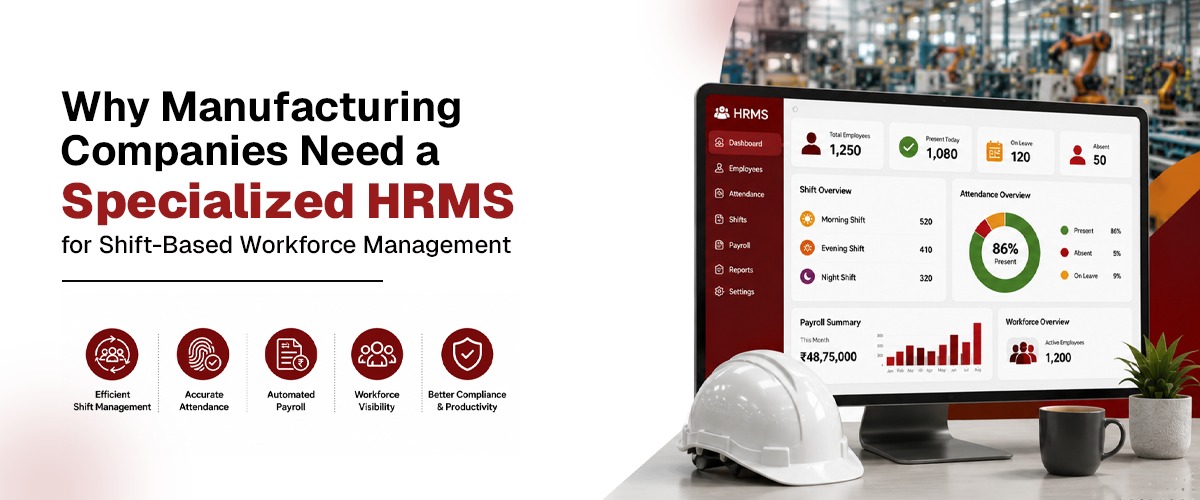
Why Manufacturing Companies Need a Specialized HRMS for Shift-Based Workforce Management
Most HR software available in the market is built with one assumption in mind: employees work a fixed 9-to-5 schedule from a desk. That assumption breaks down completely in manufacturing, where workforces operate across rotational shifts, night shifts, contract labor, and factory floors — not office cabins.
This mismatch is exactly why generic HRMS platforms struggle in manufacturing environments, and why more factories are switching to a specialized HRMS built for shift-based workforce management, like Pletox.
Why Generic HR Software Falls Short in Manufacturing
Generic HR platforms are typically designed around a small set of assumptions — one shift, salaried employees, desk-based attendance, and simple leave policies. Manufacturing breaks every one of these assumptions:
- Multiple simultaneous shifts instead of one fixed schedule
- Rotational and night shift patterns that change week to week
- Mixed workforce of permanent employees and contract or temporary labor
- Attendance on the factory floor, not at a desk with a laptop
- Overtime and loss-of-pay rules that vary by shift, role, and worker category
- Statutory compliance — Factory Act registers, PF, ESI — that must be accurate, not approximate
When manufacturing companies try to force generic HR software into this reality, the result is usually a patchwork of workarounds: spreadsheets to track shifts the software can't handle, manual overtime calculations outside the system, and separate registers for compliance because the software wasn't built for factory requirements in the first place.
How Pletox HRMS Manages Manufacturing Workforces End-to-End
1. Multi-Shift Attendance, Automated
Pletox's attendance management software supports fixed, rotational, and night shifts with automatic shift assignment and overtime calculation — removing the manual tracking that leads to disputes and errors. Factory floor teams can check in through the Pletox Self-Service Kiosk using contactless face recognition, eliminating the need for shared biometric devices or paper registers.
2. Payroll Built for Manufacturing Complexity
Manufacturing payroll isn't just base salary — it's overtime, shift allowances, loss of pay, and statutory deductions calculated differently for permanent and contract staff. Pletox Payroll automates PF, ESI, TDS, and minimum wage compliance, applying the right rules automatically instead of relying on manual spreadsheet formulas that break every time a rule changes.
3. Contract and Temporary Workforce Management
Factories often run with a mix of permanent employees and contract labor, each requiring different tracking and compliance handling. Pletox's HR and employee management module separates these worker categories cleanly, so payroll, attendance, and reporting stay accurate for every type of employee.
4. Multi-Location Visibility
For manufacturers running multiple plants or units, Pletox gives leadership a single dashboard to view attendance, payroll, and workforce data across every location — instead of collecting separate reports from each plant manually. Location tracking tools extend this visibility to field and site-based staff as well.
5. Performance and Productivity Tracking
Beyond attendance and payroll, manufacturing companies need to track productivity across shifts and teams. Pletox's performance management module helps supervisors set targets and track output, giving management real data instead of relying on end-of-month guesswork.
6. Faster Hiring for High-Volume Factory Roles
Manufacturing companies often need to hire in bulk for factory floor roles. Pletox's recruitment management tools streamline high-volume hiring and onboarding, so HR teams aren't manually processing every application and joining formality one at a time.
The Cost of Using the Wrong HRMS
Choosing a non-specialized HRMS for a manufacturing workforce isn't just inconvenient — it has real costs:
- Compliance risk from inaccurate or incomplete statutory records
- Payroll disputes from incorrect overtime or shift allowance calculations
- Wasted HR time spent working around software limitations instead of managing people
- Poor workforce planning due to lack of real shift-level visibility
A specialized platform removes these risks by being built around manufacturing HR from the start — which is the core difference between Pletox and generic HR software adapted after the fact.
Why Pletox Is Built for Shift-Based Manufacturing Workforces
Unlike platforms retrofitted with basic shift features, Pletox HRMS is designed around how manufacturing companies actually operate — combining shift management, factory floor attendance, payroll compliance, contract workforce handling, and multi-location visibility in one connected system. This makes Pletox a genuinely specialized choice for manufacturing companies, not a general-purpose HR tool with manufacturing features bolted on.
Frequently Asked Questions
1. Why do manufacturing companies need a specialized HRMS instead of generic HR software?
Generic HR software is built for fixed-schedule, desk-based employees and doesn't handle rotational shifts, factory floor attendance, contract labor, or Factory Act compliance well. A specialized HRMS like Pletox is built specifically to manage these manufacturing-specific requirements.
2. What features make an HRMS suitable for shift-based workforce management?
A suitable HRMS Like a Pletox should support multi-shift attendance, automatic overtime calculation, factory floor check-in options (like kiosks or biometrics), contract worker management, and statutory compliance features such as Factory Act registers and PF/ESI automation.
3. How does Pletox handle rotational and night shifts?
Pletox HRMS assigns rotational and night shifts automatically based on configured shift patterns, and calculates overtime and loss of pay according to the specific rules for each shift.
4. Can a specialized HRMS reduce payroll errors in manufacturing?
Yes. By automating shift-based overtime, loss of pay, and statutory deductions, a specialized HRMS like Pletox significantly reduces the manual errors common in spreadsheet-based manufacturing payroll.
5. Is Pletox suitable for manufacturing companies with contract and temporary workers?
Yes. Pletox manages permanent, contract, and temporary workers separately, applying the correct compliance and payroll rules for each category automatically.
Ready to see how a specialized HRMS can simplify shift-based workforce management for your factory? Explore Pletox HRMS or book a free demo today.